
Article Plan: Pontius Pilate Description of Jesus PDF
This article explores purported Roman accounts of Jesus, focusing on the “Pilate Letters” and their authenticity.
It delves into historical context,
analyzing claims,
and examining available PDF sources regarding Pilate’s descriptions.
Scholarly debate surrounds these texts,
with William Overton Clough’s monograph being a key resource.
The investigation considers archaeological evidence,
linguistic analysis,
and theological implications.

Bart Ehrman’s perspective highlights the lack of corroborating Roman records,
while the article addresses common misconceptions about Roman documentation practices.
Ultimately, it assesses the value of these documents.
The enduring quest to understand the historical Jesus often leads researchers to explore sources beyond the New Testament. Among the most intriguing, yet controversial, are the so-called “Pilate Letters” – purported Roman documents detailing Pontius Pilate’s involvement in the trial and crucifixion of Jesus of Nazareth. These texts, often appearing in PDF format online, claim to offer a Roman perspective on these pivotal events.
The existence and authenticity of these letters have been debated for centuries. They frequently include descriptions attributed to Pilate himself, alongside accounts from figures like Publius Lentulus, detailing Jesus’ physical appearance, teachings, and actions. The appeal lies in the possibility of corroborating, or challenging, the Gospel narratives with independent Roman testimony.
However, skepticism abounds. Scholars like Bart Ehrman point out the absence of comprehensive Roman records from that period, questioning why detailed accounts of Jesus would not be more readily available within established Roman archives. This introduction sets the stage for a critical examination of these documents, their origins, and their value in the ongoing search for the historical Jesus.
The Historical Context: Pontius Pilate’s Governorship of Judea
Pontius Pilate served as the Roman prefect (governor) of Judea from approximately 26 to 36/37 CE, a period marked by political unrest and religious tension. Appointed by Emperor Tiberius, Pilate’s primary responsibility was maintaining order and collecting taxes within a volatile province. His rule was characterized by clashes with the Jewish population, stemming from religious sensitivities and perceived disrespect for Jewish customs.
Understanding this context is crucial when evaluating the “Pilate Letters.” Roman governors typically documented significant events, but Ehrman notes a lack of extensive records from this era. The absence of detailed administrative reports makes verifying the authenticity of any purported Pilate correspondence exceedingly difficult. The political climate fostered an environment where Pilate would have been keenly aware of potential uprisings.
Pilate’s governorship ended in disgrace following complaints to Rome about his harsh governance. This backdrop informs the plausibility of any accounts, whether originating from Roman or Jewish sources, concerning his handling of the Jesus situation. The PDF documents claiming to be Pilate’s reports must be assessed within this historical framework.
The Core Question: Do Authentic Pilate Documents Exist?
The central inquiry surrounding the “Pilate Letters” revolves around their authenticity. Despite claims of Roman documentation detailing Jesus’ trial and crucifixion, concrete evidence remains elusive. Bart Ehrman emphatically states that Romans did not maintain exhaustive records, contradicting the notion that we should expect to find references to Jesus within them. The existence of such detailed reports, particularly concerning a relatively obscure figure like Jesus, is highly improbable.
The PDF documents circulating online purporting to be Pilate’s accounts are largely considered forgeries by mainstream scholarship. The question isn’t simply if they exist, but whether they genuinely originate from Pilate himself. The lack of corroborating evidence from independent Roman sources casts significant doubt on their veracity.
The debate centers on textual analysis, historical plausibility, and the potential motivations behind their creation. Establishing authenticity requires rigorous scrutiny, and currently, the evidence strongly suggests these documents are not authentic Roman records.
The “Pilate Letter” – Origins and Early Mentions
The earliest traceable origins of the “Pilate Letter” are murky, lacking a clear provenance within contemporary Roman historical records. It’s frequently associated with a letter attributed to Publius Lentulus, a figure whose connection to Pilate remains unsubstantiated. Mentions of these descriptions of Jesus appear much later, surfacing within medieval traditions and ecclesiastical writings, rather than in ancient Roman archives.

The letter gained circulation without a definitive source, raising immediate suspicions about its authenticity, as noted in discussions surrounding PDF versions of the text. Its inclusion in church correspondence suggests preservation, but also potential alteration or embellishment over time. Early mentions don’t pinpoint a specific Roman archive or official documentation.
Tracing the letter’s path reveals a reliance on secondary sources and a lack of primary evidence, fueling scholarly skepticism regarding its historical validity. The absence of corroboration from known Roman historians is a critical point of contention.
Analysis of the Lentulus Letter (Often Associated with Pilate’s Description)
The Lentulus letter, frequently paired with Pilate’s purported description of Jesus, presents significant textual challenges. It details physical characteristics and attributes, claiming to be an official report to Emperor Tiberius. However, linguistic analysis reveals stylistic inconsistencies with known Roman correspondence of the period, raising concerns about its authenticity.
The letter’s content, often found within PDF collections of Pilate-related texts, includes descriptions of Jesus’s appearance and teachings. Critics point to anachronisms and theological biases embedded within the narrative, suggesting a later, Christian-influenced authorship. The lack of independent verification further diminishes its credibility.
Scholars question the letter’s historical basis, noting its absence from established Roman historical sources. Its circulation appears to have begun much later, within medieval ecclesiastical contexts, rather than originating from Roman archives.
Key Claims within the Pilate/Lentulus Descriptions of Jesus
The Pilate and Lentulus descriptions, circulating in various PDF formats, consistently portray Jesus as a man of striking, yet unconventional, appearance. Lentulus details a medium height, straight hair, and a countenance that commands attention, though not conventionally handsome. Both accounts emphasize Jesus’s wisdom and the power of his words, attracting large crowds.
A central claim revolves around Jesus’s perceived ability to raise the dead and perform miracles, presented as a source of both fascination and concern to Pilate. The letters suggest Jesus posed a political threat due to his growing influence. These “shocking details,” as some sources label them, are presented as objective observations.
However, the accounts lack corroboration, and their theological undertones raise questions about their objectivity. The descriptions aim to present a Roman perspective, yet appear heavily influenced by later Christian narratives.
6.1 Physical Appearance of Jesus (as described in the letters)
The purported Pilate and Lentulus letters, often found in PDF compilations, offer a surprisingly detailed, though contested, depiction of Jesus’s physical form. Lentulus’s account describes Jesus as being of medium height, possessing dark brown hair, falling to the ears, and a straight, well-formed beard. His complexion is noted as being fair, with intensely blue eyes.
Notably, the descriptions avoid emphasizing conventional beauty, instead focusing on a commanding presence and a dignified bearing. The letters suggest a physically unremarkable man, yet one whose appearance held a certain power. These details aim to provide a Roman observer’s objective assessment.
However, the consistency of these features across different versions raises suspicions of a standardized, rather than authentic, description.
6.2 Jesus’ Teachings and Actions (as portrayed in the letters)
The “Pilate Letters,” circulating in PDF formats, portray Jesus as a charismatic teacher attracting large crowds, particularly among the Galileans. He is depicted as advocating for a new understanding of God, emphasizing love and forgiveness – concepts potentially unsettling to Roman authority. The letters suggest Jesus performed “miracles,” though described cautiously, as demonstrations of power rather than divine intervention.
Pilate’s account, as presented in these texts, highlights Jesus’s challenge to traditional Jewish practices and his claim to be “King of the Jews,” a direct threat to Roman rule. The letters emphasize his peaceful demeanor despite attracting a devoted following.
However, these portrayals are heavily colored by later theological interpretations, making it difficult to discern authentic Roman perceptions from embellished narratives.
William Overton Clough’s “Jesus Before Pilate”: A Monograph Review

William Overton Clough’s “Jesus Before Pilate,” a significant monograph concerning the crucifixion, meticulously compiles purported reports, letters, and acts attributed to Pontius Pilate regarding Jesus’s trial and death. This work, often found in PDF format, represents a key source for those investigating the historical claims surrounding Pilate’s involvement.
Clough’s approach is largely sympathetic to the authenticity of these documents, presenting them as valuable historical evidence. However, modern scholarship largely questions the veracity of the Pilate correspondence. The monograph’s value lies in its comprehensive collection of the texts themselves, allowing researchers to analyze the claims directly.
Despite its dated perspective, Clough’s work remains a foundational resource for understanding the historical context and the evolution of the Pilate narrative.
The Lack of Corroborating Roman Records – A Critical Issue
A central challenge to the authenticity of the “Pilate Letters” – and any Roman description of Jesus – is the conspicuous absence of corroborating evidence within extant Roman records. Despite the Roman Empire’s reputation for meticulous record-keeping, no independent Roman sources confirm the events described in the Gospels or the purported Pilate correspondence.
As Bart Ehrman points out, the assumption that Romans documented everything is a myth. If detailed records existed regarding Pilate’s governorship and Jesus’s trial, one would expect to find them. The absence of such records casts significant doubt on the claims made within the “Pilate Letters” PDF documents.
This lack of external verification is a critical issue for historians, raising serious questions about the origins and reliability of these texts.
Archaeological Evidence and its Relevance to Pilate’s Existence
While no archaeological find directly confirms the “Pilate Letters” or their descriptions of Jesus, archaeological evidence does substantiate Pontius Pilate’s historical existence as the Roman prefect of Judea. The Pilate Stone, discovered in Caesarea Maritima in 1961, bears a dedication to Tiberius Caesar and explicitly mentions Pontius Pilate as prefect.
This inscription provides independent confirmation of Pilate’s official position, lending credibility to the historical setting of the Gospel accounts. However, it’s crucial to note that the Pilate Stone, and other archaeological discoveries, offer no evidence regarding the events of Jesus’s trial or any descriptions of his appearance or teachings.
Therefore, archaeological evidence confirms Pilate’s existence but remains silent on the content of the disputed “Pilate Letters” PDF documents.
The Problem of Forgery: Identifying Potential Authorship
The authenticity of the “Pilate Letters,” often circulated in PDF format, is widely questioned, with forgery being a primary concern. Determining authorship proves exceptionally difficult, as the letters lack definitive provenance and emerged much later than Pilate’s lifetime. Scholars suggest potential origins within medieval Christian circles, aiming to bolster faith through purported Roman validation of Jesus.
The letters’ style and language don’t align seamlessly with known Roman correspondence, raising suspicions. Some theories propose authorship by individuals familiar with biblical narratives, attempting to create a compelling historical narrative. The lack of corroborating evidence and the letters’ theological slant further support the forgery hypothesis.
Identifying a specific author remains elusive, but the prevailing scholarly consensus leans towards a later, Christian origin, rather than a genuine Roman account.
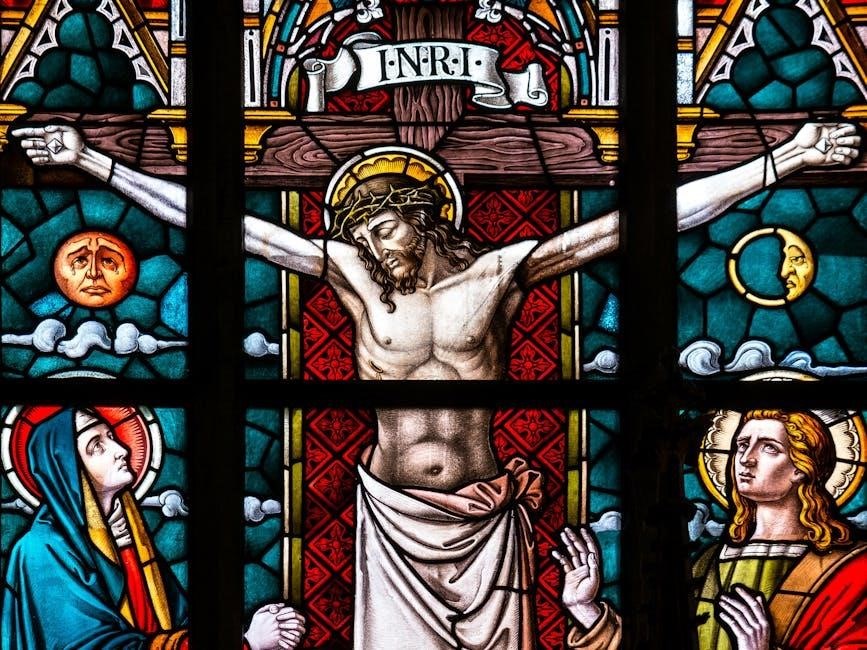
The Medieval Tradition of Pilate Correspondence
The earliest traceable appearances of Pilate’s purported descriptions of Jesus emerge from medieval sources, long after the events they describe. These accounts, often found within collections of apocryphal writings and circulated in manuscript form – precursors to modern PDFs – gained traction during the Middle Ages. The letters, attributed to Pilate and Lentulus, weren’t widely known during antiquity or the early Church period.
This delayed emergence suggests a later fabrication, potentially intended to address skepticism or provide non-biblical corroboration of the Gospel narratives. The medieval fascination with relics and authoritative testimonies likely fueled the circulation and acceptance of these texts.
The tradition of Pilate correspondence demonstrates a desire to reconcile Roman authority with Christian belief, shaping the narrative surrounding Jesus’ trial and crucifixion.
The Role of the Church in Preserving (and Potentially Altering) the Texts
The Church’s involvement with the “Pilate Letters” is complex, exhibiting both preservation and potential modification. While not canonized, these texts were copied and circulated within monastic libraries and ecclesiastical collections, ensuring their survival through the centuries – eventually finding their way into PDF formats today. However, this preservation wasn’t necessarily neutral.
Motivations for alteration could have included bolstering faith, countering criticisms, or aligning the Roman perspective with established theological doctrines. The lack of early, authoritative endorsements suggests a cautious approach, yet the continued transmission indicates a perceived value.
The Church’s role raises questions about textual integrity, demanding critical analysis of the manuscripts and their historical context to discern original content from later interpolations.
Examining the Language and Style of the Letters
A crucial aspect of assessing the “Pilate Letters” authenticity lies in scrutinizing their linguistic characteristics and stylistic features. The purported Roman correspondence should exhibit hallmarks of classical Latin prose, reflecting the administrative and literary conventions of the 1st century CE. However, anomalies in vocabulary, grammar, or sentence structure could indicate a later fabrication.
Linguistic analysis must identify potential anachronisms – words or phrases that didn’t exist during Pilate’s governorship. Furthermore, a comparison with known Roman official correspondence is essential to determine if the style aligns with established practices.
Discrepancies in tone, formality, or rhetorical devices could raise red flags, suggesting a non-Roman author attempting to mimic the style.
13.1 Linguistic Analysis: Latin and Potential Anachronisms
Detailed linguistic scrutiny of the “Pilate Letters” focuses on the Latin employed, searching for inconsistencies with 1st-century Roman usage; This involves examining vocabulary, grammatical structures, and idiomatic expressions. The presence of terms or constructions that emerged after Pilate’s time (roughly 26-36 CE) would strongly suggest forgery.
Specific attention is given to potential anachronisms in legal terminology, administrative phrasing, and common expressions. For example, the use of ecclesiastical language or concepts unknown in the Roman period would be highly suspect.
Furthermore, the letters’ Latin must be compared to established corpora of Roman texts from the same era – official decrees, private correspondence, and literary works – to identify deviations from standard practice.

13.2 Literary Style: Comparing to Known Roman Correspondence
Analyzing the literary style of the purported Pilate letters is crucial for assessing authenticity. This involves comparing their structure, tone, and rhetorical devices to genuine Roman correspondence from the 1st century CE.
Roman official letters typically adhered to specific conventions regarding salutations, closings, and the presentation of information – a direct, concise style focused on practical matters. Any significant departure from these norms raises concerns.
The “Pilate Letters” often exhibit a narrative flair and detailed descriptions that are less common in official Roman reports. Examining sentence length, complexity, and the use of emotive language helps determine if the style aligns with known Roman epistolary practices.
The Theological Implications of a Roman Account of Jesus

The existence of an authentic Roman account of Jesus, such as a detailed report from Pontius Pilate, would carry profound theological implications. It could offer an independent, non-Christian perspective on the life, teachings, and impact of Jesus of Nazareth.
Such a document might corroborate or challenge aspects of the Gospel narratives, potentially influencing interpretations of Jesus’ divinity, messianic identity, and the events surrounding his crucifixion and resurrection.
However, even a Roman account would be filtered through a Roman worldview, potentially misinterpreting or downplaying the spiritual significance of Jesus’ message. The theological value would depend on the account’s accuracy, objectivity, and the interpreter’s perspective.
PDF Availability and Online Sources of the Pilate Letters
Locating reliable PDF versions of the purported Pilate Letters proves challenging, as their authenticity remains heavily debated. William Overton Clough’s “Jesus Before Pilate,” a key monograph examining these texts, is available through various library databases and potentially as a digitized PDF.

Online searches yield numerous websites hosting translations and analyses, but verifying their source and scholarly rigor is crucial. Caution is advised when downloading PDFs from unfamiliar sources due to potential inaccuracies or forgeries.
Resources like the Library of Congress offer guidance on citing primary sources related to Pilate’s accounts. Further research may uncover digitized versions of historical analyses and scholarly articles discussing the letters’ provenance and content.
Common Misconceptions About Roman Record-Keeping
A prevalent misconception is that Romans meticulously documented all events, implying detailed records of Jesus’ trial and Pilate’s governorship should exist. However, as Bart Ehrman points out, this is a myth. Romans did not maintain exhaustive records as we might expect.
The assumption that the absence of records disproves Jesus’ existence is also flawed. Many historical figures lack extensive Roman documentation. Record-keeping focused on matters of state – taxation, military affairs, and imperial administration – not necessarily every local event.
Furthermore, surviving Roman records are fragmentary. What remains represents a tiny fraction of what was originally created, making the lack of specific references to Jesus unsurprising, even if he were a notable figure.
Bart Ehrman’s Perspective on Roman Historical Sources
Bart Ehrman, a renowned biblical scholar, offers a critical perspective on the search for Roman evidence concerning Jesus and Pilate. He emphatically states that the idea Romans kept detailed records of everything, leading to an expectation of finding information about Jesus, is a “complete myth.”
Ehrman argues that if Romans meticulously documented events as often assumed, we would possess a far more comprehensive historical record of Roman Palestine. The absence of such records doesn’t automatically validate or invalidate Jesus’ existence, but it challenges the premise of readily available Roman accounts.
He stresses that the lack of corroborating evidence isn’t necessarily surprising, given the nature of Roman record-keeping practices and the sheer volume of lost historical data. This perspective is crucial when evaluating claims surrounding the “Pilate Letters” and their authenticity.
The “Shocking Details” Claim: Evaluating Extraordinary Assertions
Certain online sources promote the idea that Pilate’s purported letter contains “shocking details” about Jesus’ appearance and even his resurrection. These claims often aim to sensationalize the historical narrative, attracting attention with extraordinary assertions about Roman perspectives on these events.
However, a critical evaluation reveals these “shocking details” originate from texts of questionable authenticity, like the Lentulus letter, lacking independent corroboration. The language and content are inconsistent with known Roman writing styles and historical context.
It’s vital to approach such claims with skepticism, recognizing the potential for fabrication and exaggeration. Extraordinary claims require extraordinary evidence, and in this case, the evidence supporting these “shocking details” remains highly dubious, relying on disputed and likely forged documents.
The Debate Over the Authenticity of the Descriptions
The core of the discussion surrounding the Pilate descriptions centers on their authenticity. Scholars widely question the validity of the letters attributed to Pilate and Lentulus, citing a lack of independent corroboration from contemporary Roman sources. Bart Ehrman emphasizes the absence of extensive Roman record-keeping, challenging the expectation of finding mentions of Jesus.
The debate hinges on textual criticism, linguistic analysis, and historical context. Critics point to anachronisms in the language and stylistic inconsistencies with known Roman correspondence. The medieval origins of the texts raise concerns about potential forgeries and alterations.
Proponents, though fewer, suggest the possibility of lost records or a deliberate suppression of information. However, the overwhelming scholarly consensus leans towards considering these descriptions as later fabrications, lacking genuine historical basis.
Comparing the Pilate Descriptions to Gospel Accounts
A critical examination involves comparing the purported Pilate descriptions with the accounts found in the Gospels. While the “Pilate Letters” offer a Roman perspective, significant discrepancies exist. The letters detail physical attributes and teachings, but these often diverge from the Gospel portrayals of Jesus.
Points of convergence are limited, primarily revolving around Pilate’s role in the trial and crucifixion. However, the letters’ emphasis on Jesus’ appearance and specific actions lacks parallel in the Gospel narratives.
Notable divergences include the level of detail regarding Jesus’ physical features and the motivations attributed to Pilate. The Gospel accounts focus on theological significance, while the letters present a more pragmatic, Roman-centric view. This contrast fuels skepticism about the letters’ authenticity.
20.1 Points of Convergence
Despite substantial differences, some limited points of convergence exist between the Pilate descriptions and the Gospel accounts. Both sources agree on the fundamental fact of Jesus’ trial before Pontius Pilate and his subsequent crucifixion as ordered by the Roman governor.
The letters and Gospels both acknowledge Pilate’s hesitancy, portraying him as reluctant to condemn Jesus, potentially yielding to pressure from Jewish authorities. This shared element, though interpreted differently, appears in both sets of texts.
Furthermore, both sources confirm Jesus was presented as a claimant to kingship, a charge that likely triggered Pilate’s concern regarding Roman authority. However, the specifics of this claim and its implications vary considerably between the accounts.
20.2 Points of Divergence
Significant divergences separate the Pilate descriptions from the Gospel narratives. The letters, particularly those attributed to Pilate and Lentulus, offer detailed physical descriptions of Jesus – height, hair color, and facial features – entirely absent from the Gospels.
The letters also ascribe specific details to Jesus’ teachings and actions, including claims of miraculous powers and a direct connection to divine origins, presented in a manner distinct from the Gospel portrayals. These “shocking details” lack corroboration.
Crucially, the letters’ account of Jesus’ resurrection differs markedly from the Gospel accounts, often presenting a more embellished or fantastical narrative. The Gospels focus on spiritual resurrection, while the letters lean towards physical resuscitation.
Finally, the literary style and historical context of the letters raise serious doubts about their authenticity, contrasting sharply with known Roman correspondence.
The Impact of the Pilate Letters on Modern Scholarship
The purported Pilate Letters have profoundly impacted, yet largely been dismissed by, modern scholarship. While initially intriguing, the overwhelming consensus views them as forgeries, influencing research primarily as cautionary tales regarding historical source criticism.
Scholars like Bart Ehrman consistently emphasize the absence of corroborating Roman records, highlighting the letters’ unreliability. William Overton Clough’s monograph, though a detailed compilation, is now considered historically problematic.
The debate spurred increased scrutiny of early Christian texts and Roman historical methodology. The letters serve as a case study in identifying anachronisms and evaluating the authenticity of ancient documents.
Despite their lack of historical validity, the letters continue to fascinate, prompting ongoing investigation into the medieval tradition of Pilate correspondence and the motivations behind their creation.
Assessing the Value of the Pilate Documents
Ultimately, the “Pilate Letters” possess limited historical value. Despite claims of “shocking details” and a Roman perspective on Jesus, scholarly consensus deems them forgeries lacking corroborating evidence. The absence of supporting Roman records, as emphasized by Bart Ehrman, is critical.
Their significance lies not in their authenticity, but in what they reveal about the historical imagination and the enduring fascination with Jesus. They demonstrate the challenges of source criticism and the potential for fabricated accounts.
William Overton Clough’s work, while comprehensive, now serves as a cautionary example. The letters remain valuable for understanding the medieval tradition of Pilate correspondence and the evolution of Christian narratives.
While failing to provide genuine insight into Pilate’s view of Jesus, they continue to fuel debate and research into the historical Jesus and Roman Palestine.
Further Research: Resources and Areas for Investigation
Continued investigation should focus on expanding the search for corroborating Roman records, despite Ehrman’s skepticism regarding their existence. Examining provincial administrative archives, if accessible, could prove fruitful, though unlikely.
Linguistic analysis of the Pilate/Lentulus letters, utilizing advanced computational methods, might reveal further anachronisms or stylistic inconsistencies. Deep dives into medieval manuscript traditions are also crucial.
Exploring the socio-political context of Roman Judea – focusing on Pilate’s governorship – could illuminate potential motivations for forging such documents. Researching the origins and spread of the “Pilate Letters” within the Church is vital.
Accessing digitized collections of primary sources, including Library of Congress resources, and exploring academic databases will aid research. Investigating the reception of Clough’s monograph throughout history is also recommended.