Ice-O-Matic Troubleshooting Manual: A Comprehensive Guide
This manual details troubleshooting, service, and maintenance for Ice-O-Matic ice makers, backed by parts and labor warranties.
It covers various series,
including UCG, ICE1806/7, ICE2106/7, HIS Line, and MFI1506 models, offering comprehensive support for optimal performance and longevity.
Ice-O-Matic has established itself as a leading manufacturer of commercial ice machines, renowned for durability and reliability. This guide serves as a comprehensive resource for understanding, maintaining, and troubleshooting these vital pieces of equipment. Ice-O-Matic machines cater to diverse needs, from undercounter models like the UCG series to high-production units.
Each Ice-O-Matic ice maker is engineered with specific components, including compressors, water valves, and sensors, all working in harmony to produce ice efficiently. Understanding the basic operational principles – water intake, freezing cycle, and ice harvesting – is crucial for effective troubleshooting. Furthermore, every unit is backed by a warranty covering both parts and labor, ensuring customer peace of mind. Registering your product and verifying warranty status can be done through Ice-O-Matic’s official channels. Proper installation, adhering to specified requirements, is paramount for optimal performance and longevity.
Understanding Ice-O-Matic Warranty Information
Ice-O-Matic provides comprehensive warranty coverage for its ice machines, demonstrating a commitment to product quality and customer satisfaction. Typically, these warranties encompass both parts and labor, protecting against manufacturing defects. The specific terms and duration of the warranty can vary depending on the model and date of manufacture.
To access detailed warranty information, including coverage specifics and claim procedures, it’s essential to register your Ice-O-Matic product. This registration process also allows you to easily check your warranty status online. The warranty documentation outlines what is covered, any exclusions, and the steps required to initiate a warranty claim. Maintaining proper maintenance records, as outlined in the service manual, can be beneficial when submitting a claim. Warranty details can be found on the official Ice-O-Matic website or by contacting their customer support.
Locating Ice-O-Matic Service Manuals
Finding the correct Ice-O-Matic service manual is crucial for effective troubleshooting and maintenance. While older manuals might require some searching, several resources are available. Online searches, utilizing the specific model number (e.g., UCG060A, ICE1806), often yield results, including downloadable PDFs. HVAC-Talk forums and similar online communities can also be valuable sources, with users frequently sharing links to manuals.
Ice-O-Matic’s official website is a primary resource, though navigation can sometimes be challenging for older models. For specific series like the HIS Line or MFI1506, targeted searches are recommended. If online resources prove insufficient, contacting Ice-O-Matic directly or an authorized service provider can facilitate obtaining the necessary documentation. Remember to have the machine’s date of manufacture and model number readily available when requesting assistance.

Common Ice-O-Matic Issues & Troubleshooting
Addressing typical problems—like no ice production, low output, cloudy ice, unusual noises, or water leaks—requires systematic diagnosis and often involves component checks and cleaning.
Ice Maker Not Producing Ice
A complete lack of ice production in your Ice-O-Matic machine signals a critical issue demanding immediate attention. Begin by verifying the unit receives power and the water supply is connected and fully open. Check the ice maker’s control panel for any error codes, referencing the service manual for specific interpretations.
Inspect the water inlet valve for obstructions or malfunctions; a faulty valve prevents water from entering the ice-making cycle. Examine the fill cycle – is water entering the evaporator? A frozen water line or a malfunctioning water pump could be the culprit.
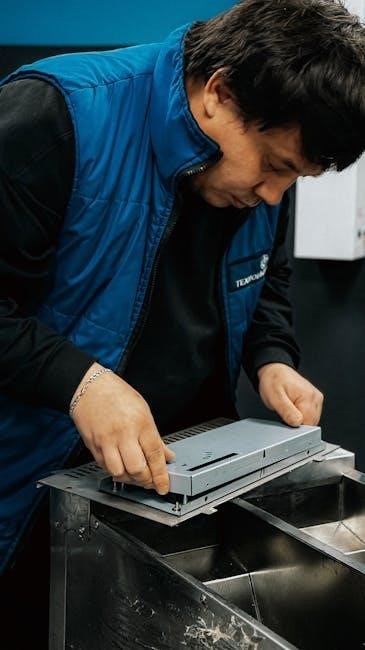
Furthermore, assess the harvest cycle. If the ice isn’t being harvested, the grid heater or the harvest sensor might be defective. Confirm the compressor is running; a non-operational compressor halts ice production entirely. Finally, ensure the air vents aren’t blocked, as restricted airflow impacts cooling efficiency.
Low Ice Production
Reduced ice output from your Ice-O-Matic unit indicates a partial system failure requiring systematic diagnosis. Initially, confirm the ambient temperature isn’t exceeding the machine’s operational limits; higher temperatures decrease efficiency. Inspect the water filter – a clogged filter restricts water flow, diminishing ice yield.
Evaluate the water pressure; insufficient pressure hinders complete ice cube formation. Check the evaporator plate for scale buildup, as mineral deposits impede heat transfer. A partially failing compressor or a restricted refrigerant flow can also contribute to low production.
Examine the harvest cycle components – a weak grid heater or a sluggish harvest sensor may not fully release ice. Finally, verify the ice storage bin isn’t overfilled, as this can trigger a shutdown of the ice-making process. Consistent monitoring is key.
Ice is Cloudy or Discolored
Cloudy or discolored ice from your Ice-O-Matic machine typically signals water quality issues or inadequate cleaning. The most common cause is mineral content in the water supply; consider installing or replacing the water filter to remove impurities. Regularly scheduled cleaning and sanitization are crucial to prevent biofilm buildup within the system.
Inspect the water lines for corrosion or sediment accumulation, as these can introduce contaminants. A pinkish or reddish hue often indicates iron bacteria, requiring professional cleaning and potentially a water treatment solution. Check the evaporator plate for scale; mineral deposits contribute to cloudiness.
Ensure proper ventilation around the machine to prevent condensation, which can foster microbial growth. If discoloration persists after addressing these factors, consult a qualified technician for a thorough system inspection and cleaning.
Ice Maker is Noisy
Unusual noises from your Ice-O-Matic ice maker can indicate several potential issues, ranging from minor vibrations to component failures. A common source of noise is the water inlet valve; check for proper water pressure and ensure the valve isn’t vibrating against nearby surfaces. The compressor, a key component, may produce humming or buzzing sounds – excessive noise warrants professional attention.
Listen for rattling sounds during the harvest cycle, which could signify loose parts or ice buildup. Inspect the fan motor for obstructions or bearing wear, as these can cause whining or grinding noises. Ensure the machine is level; an uneven surface amplifies vibrations.
If the noise is new or progressively worsens, discontinue use and contact a qualified technician for diagnosis and repair. Ignoring unusual sounds can lead to more significant and costly damage.
Water Leaks from the Ice Maker
Water leaks from your Ice-O-Matic ice maker require immediate attention to prevent water damage and ensure efficient operation; Begin by inspecting the water line connections for tightness and any signs of corrosion. Check the drain line for clogs or disconnections, as a blocked drain can cause water to back up and leak.
Examine the water inlet valve and the fill tube for cracks or damage. Leaks can also originate from the ice storage bin due to improper sealing or ice buildup. Inspect the spray nozzles for blockage or damage, which can cause water to spray outside the designated area.
If the leak persists after these checks, a faulty water pump or internal component may be the cause. Discontinue use and contact a qualified technician for professional diagnosis and repair to avoid further complications.

Specific Ice Maker Series Troubleshooting
This section provides targeted troubleshooting guidance for distinct Ice-O-Matic series, including UCG (undercounter), ICE1806/7/2106/7, HIS Line, and MFI1506 models, for efficient repair.
UCG Series (Undercounter) Troubleshooting
The Ice-O-Matic UCG Undercounter Series ice makers require specific attention during troubleshooting. Installation and service manuals detail step-by-step procedures for installation, start-up, operation, cleaning, and maintenance. Common issues often relate to water supply, drain lines, or the refrigeration system.
Begin by verifying proper water pressure and ensuring the water filter is clean. Inspect drain lines for blockages, as restricted drainage can cause operational failures. If the unit isn’t producing ice, check the harvest cycle and confirm the water valve is functioning correctly.
For cooling issues, assess the compressor and fan motor. Refer to the service manual for component-specific troubleshooting steps and part listings; Always disconnect power before performing any maintenance or repairs. Proper installation, as outlined in the manual, is crucial for reliable performance. Remember to consult the manual for service addresses if professional assistance is needed.
ICE1806, ICE1807, ICE2106, ICE2107 Series Troubleshooting
Troubleshooting the ICE1806, ICE1807, ICE2106, and ICE2107 series requires referencing the dedicated service documentation. These models share common components, but specific issues may vary. Begin by checking for error codes, as these provide valuable diagnostic information. A lack of ice production often points to water supply problems, a faulty water valve, or issues with the harvest cycle.
Inspect the water inlet valve for obstructions and verify proper water pressure. If ice is cloudy or discolored, the water filter likely needs replacement. For cooling concerns, examine the compressor and condenser fan. The service manual provides detailed part listings and diagrams to aid in repairs.
Always prioritize safety by disconnecting power before any maintenance. Proper installation, as detailed in the installation manual, is essential for optimal performance and longevity. If issues persist, consult the manual for authorized service addresses.
HIS Line Ice Maker Troubleshooting
Troubleshooting the HIS Line ice makers necessitates a review of the specific HIS Line service manual. Common issues include reduced ice production, often stemming from water supply interruptions or a malfunctioning water inlet valve. Inspect the valve for blockages and confirm adequate water pressure reaching the unit. Cloudy or discolored ice typically indicates a need for water filter replacement, ensuring water purity.
Noisy operation could signal a failing compressor or fan motor; careful inspection is crucial. Harvest cycle failures require checking the timing and functionality of related components. Refer to the detailed parts listings within the manual for accurate identification and replacement.
Remember to disconnect power before any service attempts. Proper installation, adhering to the manual’s guidelines, is vital for reliable operation. For complex issues, locate authorized service addresses listed in the documentation.
MFI1506 Series Troubleshooting
Addressing issues with the MFI1506 Series requires consulting the dedicated MFI1506 installation and service manual. Initial troubleshooting should focus on verifying proper installation, ensuring adherence to the step-by-step procedures outlined within. Low ice production often points to water supply problems – check for frozen lines or a faulty water inlet valve. Inspect the valve for obstructions and confirm sufficient water pressure.
If the unit isn’t operating, examine the electrical connections and control board functionality. Unusual noises may indicate a failing compressor or fan motor, necessitating professional assessment. Refer to the service manual’s parts listings for accurate component identification.
Regular cleaning and maintenance, as detailed in the manual, are crucial for preventing issues. Always disconnect power before servicing. Locate authorized service addresses for complex repairs.

Maintenance & Cleaning Procedures
Regular cleaning, at least monthly, is vital for automatic ice cube makers. Sanitizing and upkeep, detailed in the manual, ensure optimal performance and longevity of your Ice-O-Matic unit.
Regular Cleaning Schedule
Establishing a consistent cleaning schedule is paramount for maintaining the efficiency and hygiene of your Ice-O-Matic ice maker. A monthly cleaning routine is generally recommended as a baseline, however, the frequency may need adjustment based on usage and water quality. More frequent cleaning is advisable in environments with high mineral content or heavy use.
Daily checks should include visual inspections for scale buildup and debris accumulation; Weekly, examine and clean the water inlet screen to prevent blockages. The monthly deep clean should encompass a thorough sanitization of the ice-making surfaces, water reservoir, and distribution system.
Always refer to the Ice-O-Matic manual for specific cleaning agent recommendations and dilution ratios. Utilizing approved cleaning solutions ensures compatibility with the machine’s components and prevents damage. Documenting each cleaning session, including the date and procedures performed, helps track maintenance and identify potential issues proactively. Consistent adherence to a regular cleaning schedule significantly extends the lifespan of your ice maker and guarantees the production of safe, high-quality ice.
Cleaning and Sanitizing Instructions
Proper cleaning and sanitizing are crucial for preventing scale buildup, mold growth, and ensuring ice purity within your Ice-O-Matic machine. Begin by disconnecting power and water supply before initiating any cleaning procedure. Drain the ice maker completely, removing any existing ice.
Prepare a cleaning solution using an Ice-O-Matic approved descaler, following the manufacturer’s dilution instructions. Circulate this solution through the ice-making cycle, allowing it to thoroughly clean internal components. Rinse repeatedly with clean water until all traces of the descaler are removed.
Next, sanitize the system using an Ice-O-Matic approved sanitizer. Again, circulate the solution and rinse thoroughly. Pay close attention to areas prone to bacterial growth, such as the water reservoir and distribution tubes. After sanitizing, wipe down all external surfaces with a food-safe disinfectant. Always consult your machine’s manual for specific instructions and safety precautions.
Water Filter Replacement
Regular water filter replacement is paramount for maintaining ice quality and preventing damage to your Ice-O-Matic ice maker. Sediment and impurities in water can lead to scale buildup, reduced ice production, and compromised sanitation. The frequency of filter changes depends on water quality and usage, but generally, replacement is recommended every six months, or sooner if ice clarity diminishes.
Before replacing the filter, shut off the water supply to the ice maker. Locate the filter housing, typically found where the water line connects to the machine. Carefully remove the old filter, noting its orientation for correct installation of the new one.
Lubricate the O-rings of the new filter with potable water and install it securely into the housing, ensuring a tight seal. Turn the water supply back on and check for leaks. Flush the system by running several ice-making cycles to remove any air or loose particles. Refer to your machine’s specific manual for detailed filter specifications and replacement procedures.

Component-Specific Troubleshooting
Diagnosing issues requires examining key components: compressors, water valves, harvesting cycles, and sensors. Identifying malfunctions within these parts ensures targeted repairs and optimal ice maker function.
Compressor Issues
Compressor failure is a significant issue in Ice-O-Matic machines, often indicated by a lack of cooling or ice production. Initial checks should verify proper power supply to the compressor and assess the overload protector for continuity. A non-functioning overload protector will prevent the compressor from starting.
Listen for unusual noises – clicking, humming, or rattling – which can signal internal damage or a locked rotor. If the compressor is running but not pumping refrigerant, a leak in the sealed system is likely, requiring a qualified technician for diagnosis and repair.
Overheating can also cause compressor shutdown; ensure adequate ventilation around the unit. Inspect the condenser coils for dirt and debris, as restricted airflow reduces cooling efficiency. Remember, refrigerant handling requires EPA certification; do not attempt to service the sealed system yourself.
Furthermore, capacitor issues can prevent the compressor from starting, so testing the capacitor’s capacitance is crucial. A failed start capacitor is a common cause of compressor-related problems.
Water Valve Problems
Water valve malfunctions are frequent causes of ice maker issues, manifesting as insufficient water fill or continuous water flow. Begin by checking the valve’s solenoid for proper voltage during the fill cycle. A lack of voltage indicates an electrical issue upstream, potentially a faulty control board or wiring.

If voltage is present, but the valve doesn’t open, the solenoid itself may be defective and require replacement. Inspect the water inlet screen for blockage, as debris can restrict water flow and damage the valve.
Listen for a clicking sound when the valve should be opening; silence suggests a failed solenoid. Ensure the water supply pressure is within the manufacturer’s specified range – too low or too high can affect valve operation.
Also, check for kinks or obstructions in the water line leading to the valve. A partially clogged valve can cause low ice production or improperly formed cubes.
Harvesting Cycle Failures
Harvesting cycle failures prevent ice from being released from the evaporator plate, leading to reduced ice production or a complete stoppage. Common causes include a malfunctioning harvest sensor, a faulty hot gas valve (in applicable models), or a problem with the timer controlling the harvest sequence.
Inspect the harvest sensor for proper alignment and functionality; a misaligned or defective sensor won’t signal the control board to initiate the harvest. Verify the hot gas valve is opening and closing correctly, allowing refrigerant to flow and melt the ice bond.
Check the timer or control board for proper programming and operation. A stuck or malfunctioning timer can disrupt the harvest cycle. Examine the defrost heater and thermostat; a faulty heater won’t melt the ice, and a bad thermostat won’t activate the heater.
Ensure there are no mechanical obstructions preventing the ice from falling, such as bent grid or ice buildup.
Sensor Malfunctions
Sensor malfunctions within Ice-O-Matic machines can disrupt critical functions, leading to inconsistent performance or complete failures. These sensors monitor temperature, water level, and ice thickness, relaying information to the control board. Common culprits include faulty water level sensors, temperature probes, and ice thickness sensors.
A malfunctioning water level sensor can cause overfilling or insufficient water supply, impacting ice production. Temperature probes, if defective, provide inaccurate readings, affecting the defrost and harvest cycles. Ice thickness sensors failing to detect proper ice formation can lead to thin or improperly formed ice cubes.
Use a multimeter to test sensor resistance and voltage, comparing readings to the manufacturer’s specifications. Inspect wiring connections for corrosion or damage. Replace any sensors exhibiting erratic or out-of-range readings. Proper sensor function is crucial for efficient and reliable operation.
Advanced Troubleshooting & Service
Accessing service parts listings, identifying manufacture dates, and locating authorized service addresses are vital for complex repairs. Installation requirements for flake ice machines must be followed.
Identifying Date of Manufacture
Determining the manufacture date of your Ice-O-Matic ice maker is crucial for warranty verification and accessing the correct service information. Older models may require different troubleshooting approaches and utilize specific parts no longer readily available. Unfortunately, pinpointing the exact date can sometimes be challenging, especially with older units where labeling practices may have varied.
While a definitive location isn’t universally consistent across all models, the date is often found on the machine’s data plate. This plate is typically located on the exterior of the unit, often on the side or back panel. Look for a date code, which may be represented in several formats, including month/year (e.g., 8/22/15) or a serial number that can be decoded using Ice-O-Matic’s resources.
If the date isn’t immediately visible, consulting the service manual specific to your model can provide guidance. If you are still unable to locate the date, contacting Ice-O-Matic directly with the model and serial number is recommended. They can assist in identifying the manufacture date based on their records.
Accessing Service Parts Listings
Obtaining accurate service parts listings is essential for efficient repairs of your Ice-O-Matic ice maker. These listings detail every component, including part numbers, descriptions, and often exploded diagrams to aid in identification and proper installation.
The most reliable source for Ice-O-Matic parts listings is through authorized distributors or directly via the Ice-O-Matic website. Service manuals, specifically those for your model (like the ICE1806, ICE1807, ICE2106, and ICE2107 series documentation), frequently include detailed parts breakdowns. These manuals often provide visual representations alongside the part numbers, simplifying the ordering process.
When searching, having the complete model number and serial number of your ice maker is vital. This ensures you receive the correct parts compatible with your specific unit. Online parts catalogs and distributor websites allow searching by model number, streamlining the process. Remember to verify compatibility before ordering to avoid delays and ensure a successful repair.
Finding Service Addresses
Locating authorized Ice-O-Matic service providers is crucial when repairs exceed your capabilities or require specialized expertise. Ice-O-Matic maintains a network of qualified technicians equipped to diagnose and resolve complex issues with your ice maker.
The Ice-O-Matic website offers a “Find a Service Provider” tool, allowing you to search for authorized service centers based on your location. This tool ensures you connect with technicians trained and certified to work on Ice-O-Matic equipment. Additionally, some service manuals, particularly those covering installation and maintenance, contain a list of service addresses on the final pages.
When contacting a service provider, be prepared to provide your ice maker’s model and serial number. This allows them to accurately assess the issue and dispatch a technician with the appropriate skills and parts. Utilizing authorized service ensures genuine Ice-O-Matic parts and warranty compliance.
Understanding Flake Ice Machine Installation Requirements
Proper installation is paramount for the reliable operation and longevity of any Ice-O-Matic flake ice machine. Incorrect installation can lead to performance issues, increased energy consumption, and potential damage to the unit.
Flake ice machines require adequate ventilation to dissipate heat generated during operation. Installation spaces must adhere to the manufacturer’s specified clearances to prevent overheating. Furthermore, the machine must be fitted in a manner ensuring proper drainage, preventing water accumulation and potential hygiene concerns.
Water and electrical connections must comply with local codes and regulations. A dedicated electrical circuit is typically required, and water supply lines should be appropriately sized and protected from freezing. Refer to the installation manual for detailed specifications and guidelines. Ignoring these requirements can void the warranty.