Microelectronic Circuits 8th Edition PDF: A Comprehensive Plan
Microelectronic circuits, often called microchips, integrate billions of transistors, enabling today’s communication society; the 8th Edition provides a detailed exploration of these vital components and their applications.
Microelectronic circuits represent the foundation of modern electronics, intricately combining billions of transistors onto a single semiconductor material substrate. These microchips, as they are colloquially known, are the driving force behind the pervasive information and communication technologies we rely on daily. The study of these circuits is crucial for understanding the functionality of countless devices, from smartphones and computers to complex industrial control systems.
The 8th Edition of “Microelectronic Circuits” serves as a comprehensive resource for delving into this fascinating field; It provides a detailed examination of the principles governing the behavior of these circuits, covering both analog and digital designs. Understanding the core concepts within these circuits is paramount for both students and professionals seeking to innovate and advance the field of electronics. The text explores the intricate interplay between microelectronic devices – transistors, capacitors, and resistors – and their role in creating functional systems.
The Significance of the 8th Edition
The 8th Edition of “Microelectronic Circuits” builds upon decades of established excellence, offering a significantly updated and refined learning experience. Published since 1969, the accompanying Microelectronics Journal reflects ongoing advancements, and this edition incorporates the latest developments in the field. It addresses the increasing integration densities of microelectronic devices, a key factor in modern technology.
This edition’s importance lies in its ability to prepare students and professionals for the challenges of designing and analyzing increasingly complex circuits. It provides a thorough understanding of fabrication processes, including printing, drying, and sintering, alongside analysis of potential issues like cracking and delamination. Furthermore, it introduces emerging technologies, ensuring relevance in a rapidly evolving landscape. Access to the PDF version facilitates convenient study and research, making this edition an invaluable resource for anyone involved in microelectronics.
Authors: Adel S. Sedra and Kenneth C. Smith
Adel S. Sedra and Kenneth C. Smith are highly respected figures in the field of microelectronics, renowned for their comprehensive and accessible approach to teaching this complex subject. Their collaborative work on “Microelectronic Circuits” has become a cornerstone textbook for generations of students and a valuable reference for practicing engineers.
The authors’ dedication to clarity and thoroughness is evident throughout the 8th Edition. They expertly bridge the gap between theoretical concepts and practical applications, ensuring a deep understanding of circuit behavior. Their combined expertise covers a wide range of topics, from fundamental device characteristics to advanced circuit design techniques. The availability of the PDF version of their work further extends its reach and impact, allowing for wider access to their invaluable knowledge. Their contributions have significantly shaped the field of microelectronics education.
Key Features and Updates in the 8th Edition
The 8th Edition of “Microelectronic Circuits” builds upon its established foundation with significant updates and enhancements. These improvements reflect the rapid advancements in microelectronics technology and address the evolving needs of students and professionals. Key features include revised examples and problems, ensuring relevance to contemporary circuit design practices.
The updated content incorporates the latest developments in microchip integration density and fabrication processes, including detailed analysis of film thicknesses around 120 µm. New material covers emerging technologies and their impact on circuit performance. The PDF format offers enhanced accessibility and searchability. Furthermore, the text emphasizes practical applications, such as electro-driven membrane reactors for wastewater treatment and fluoride/silica crystallization, demonstrating the real-world relevance of microelectronic principles. These updates solidify the 8th Edition as a leading resource.
Target Audience: Students and Professionals
The “Microelectronic Circuits” 8th Edition PDF caters to a broad audience, primarily targeting undergraduate and graduate students in electrical engineering and computer engineering programs. Its comprehensive coverage of core concepts makes it ideal for coursework in analog and digital circuit design. The textbook’s depth also appeals to practicing professionals seeking to update their knowledge or delve into specialized areas of microelectronics.
Engineers involved in microchip fabrication, device characterization, and system integration will find the detailed explanations of transistor behavior, interconnects, and fabrication processes invaluable. Researchers utilizing the Microelectronics Journal as a forum will appreciate the foundational knowledge provided. The accessible PDF format facilitates self-study and professional development, making it a versatile resource for anyone involved in the field, from students to seasoned experts.
Core Concepts Covered in the Textbook
The “Microelectronic Circuits” 8th Edition PDF meticulously covers fundamental concepts essential to understanding modern electronics. Key areas include the characteristics and applications of microelectronic devices – transistors, capacitors, and resistors – forming the building blocks of integrated circuits. It delves into analog circuit analysis and design, exploring amplifiers, filters, and operational circuits.
Furthermore, the textbook provides a robust foundation in digital circuit principles, encompassing logic gates, combinational and sequential logic, and memory systems. It addresses crucial aspects of microchip integration density and its impact on performance. Fabrication processes like printing, drying, and sintering are explained, alongside analysis of potential issues like cracking and delamination. The text also touches upon emerging technologies shaping the future of microelectronics.
Chapter Breakdown: Analog Circuits
The “Microelectronic Circuits” 8th Edition PDF dedicates significant coverage to analog circuits, beginning with foundational semiconductor device physics. Subsequent chapters detail the analysis and design of diode circuits, including rectifiers and clippers; A core focus lies on transistor amplifiers – common-source, common-emitter, and common-collector configurations – with detailed examination of biasing techniques and small-signal models.
Further chapters explore operational amplifiers (op-amps), their characteristics, and diverse applications like summing amplifiers, integrators, and differentiators. Filter design, encompassing low-pass, high-pass, band-pass, and band-stop filters, receives comprehensive treatment. The text also covers analog-to-digital conversion (ADC) and digital-to-analog conversion (DAC) techniques, bridging the gap between analog and digital domains.
Chapter Breakdown: Digital Circuits
The “Microelectronic Circuits” 8th Edition PDF provides a robust exploration of digital circuits, starting with fundamental logic gates – AND, OR, NOT, NAND, NOR, and XOR – and Boolean algebra. It then delves into combinational logic design, covering adders, multiplexers, decoders, and programmable logic arrays (PLAs). Sequential logic is examined in detail, focusing on flip-flops (SR, JK, D, and T) and their applications in registers and counters.
The text further explores state machine design, including Moore and Mealy models. Memory circuits, such as RAM and ROM, are thoroughly discussed, alongside their organization and characteristics. Coverage extends to arithmetic circuits, including multiplication and division algorithms. The 8th Edition also incorporates modern digital design concepts and tools, preparing students for advanced coursework and industry applications.
Applications of Microelectronic Circuits
Microelectronic circuits, as detailed in the 8th Edition PDF, underpin a vast array of modern technologies. They are fundamental to communication systems, powering smartphones, computers, and network infrastructure. In the realm of consumer electronics, they drive televisions, audio equipment, and gaming consoles. The automotive industry relies heavily on microchips for engine control, safety systems, and infotainment.
Furthermore, medical devices, including pacemakers, imaging systems, and diagnostic tools, depend on precise and reliable microelectronic circuits. Industrial automation utilizes them for process control, robotics, and sensor networks. Emerging applications include gas sensing, catalysis, and energy storage, leveraging the high surface area and tunable properties of microelectronic devices. The 8th Edition highlights these diverse applications, showcasing the pervasive impact of microelectronics on contemporary life.

Microchip Integration Density and its Impact
The 8th Edition PDF of Microelectronic Circuits emphasizes the critical role of integration density – the number of transistors packed onto a single chip. This density has dramatically increased over decades, driving exponential improvements in computing power and functionality. Higher integration leads to smaller, faster, and more energy-efficient devices.
This advancement has enabled the creation of complex systems-on-a-chip (SoCs), integrating entire functionalities into a single microchip. The 8th Edition details how this impacts performance, cost, and reliability. Increased density presents challenges in heat dissipation and signal integrity, requiring innovative design techniques. The ability to combine billions of transistors on a small semiconductor piece has fundamentally shaped today’s information and communication society, as explored within the comprehensive content of the 8th Edition.
Microelectronic Devices: Transistors, Capacitors, and Resistors
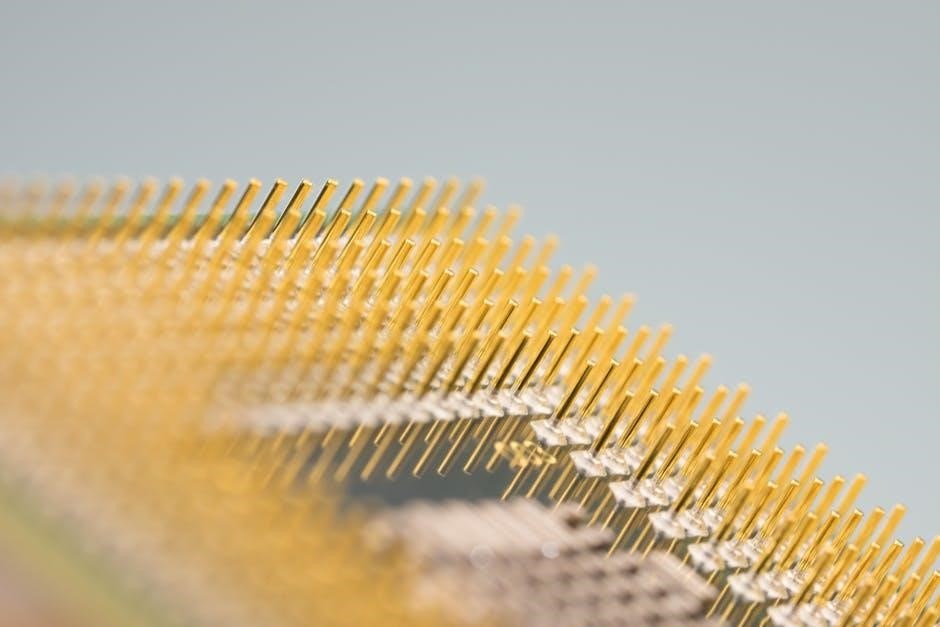
The Microelectronic Circuits 8th Edition PDF provides in-depth coverage of fundamental building blocks: transistors, capacitors, and resistors. Transistors, the core of modern electronics, are examined extensively, detailing their operation and various types (MOSFETs, BJTs). The text explains how these devices act as switches and amplifiers, crucial for circuit functionality.
Capacitors and resistors, while simpler, are equally vital for circuit behavior. The 8th Edition explores their characteristics, modeling, and applications in biasing, filtering, and signal conditioning. Understanding these components is essential for analyzing and designing microelectronic circuits. The PDF version offers detailed diagrams and examples, illustrating how these devices interact within complex systems, and their protection from environmental factors is also discussed.
Protection of Active Chip Components
The Microelectronic Circuits 8th Edition PDF emphasizes the critical need to protect sensitive active chip components – transistors, primarily – from environmental factors. These components are susceptible to damage from moisture, contaminants, and electrostatic discharge (ESD). The text details various protection strategies, including passivation layers and packaging techniques.
These layers create a barrier against external elements, ensuring long-term reliability. The 8th Edition also explores ESD protection circuits, designed to safely dissipate static electricity. Proper handling procedures, crucial during manufacturing and assembly, are also highlighted within the PDF. Understanding these protective measures is vital for designing robust and dependable microelectronic systems, maximizing their lifespan and performance, and minimizing failures.
Electrical and Mechanical Connections
The Microelectronic Circuits 8th Edition PDF dedicates significant attention to establishing reliable electrical and mechanical connections within microelectronic systems. These connections are paramount for functionality, ensuring signals are transmitted efficiently and the chip remains physically stable. The text details various bonding techniques, including wire bonding, flip-chip bonding, and tape automated bonding (TAB), each with its advantages and disadvantages.
Furthermore, the 8th Edition explores the materials used for interconnects, such as gold, aluminum, and copper, and their impact on performance. Mechanical considerations, like stress and strain on bonds, are also addressed; The PDF emphasizes the importance of robust connections to withstand thermal cycling and mechanical shock, guaranteeing long-term operational integrity of the microelectronic device.
Printed Microelectronic Interconnects
The Microelectronic Circuits 8th Edition PDF thoroughly examines printed microelectronic interconnects, a crucial aspect of modern chip fabrication. These interconnects, forming the wiring within the circuit, are often created using techniques like photolithography and etching. The 8th Edition details the materials used – typically metals like copper or aluminum – and the processes involved in depositing and patterning them.
A key focus is on achieving high resolution and precision in printing these interconnects, as smaller feature sizes lead to improved performance. The PDF also delves into challenges like minimizing resistance and capacitance in the interconnects. Investigations into film thicknesses around 120 µm are presented, alongside analysis of cracking and delamination during fabrication steps like printing, drying, and sintering, ensuring interconnect reliability.
Film Thickness in Microelectronic Fabrication (120 µm Range)
The Microelectronic Circuits 8th Edition PDF dedicates significant attention to film thickness control during fabrication, particularly within the 120 µm range, typical for printed microelectronic interconnects. Achieving precise film thickness is paramount for optimal device performance and reliability, influencing conductivity, capacitance, and overall circuit behavior.
The 8th Edition details various deposition techniques – sputtering, chemical vapor deposition, and others – and their impact on film uniformity and thickness. It explores how variations in thickness can lead to defects like cracking and delamination, which are thoroughly investigated through experimental analysis. Samples are fabricated at different temperatures to assess film integrity post-printing, drying, and sintering. The PDF emphasizes the importance of metrology techniques for accurate thickness measurement and process control, ensuring consistent and high-quality microelectronic components.
Fabrication Processes: Printing, Drying, and Sintering
The Microelectronic Circuits 8th Edition PDF provides a comprehensive overview of core fabrication processes: printing, drying, and sintering, crucial for creating microelectronic interconnects. The text details various printing methods, including screen printing and inkjet printing, highlighting their advantages and limitations in achieving desired pattern resolution and material deposition.

Following printing, the 8th Edition explains the importance of controlled drying to remove solvents without inducing stress or cracking in the deposited films; Sintering, a high-temperature process, is then examined for its role in consolidating the printed material, enhancing conductivity, and improving mechanical strength. The PDF emphasizes the interplay between these processes and their impact on film quality, specifically addressing potential issues like cracking and delamination, investigated through experimental analysis at varying temperatures. Understanding these steps is vital for reliable microchip production.
Cracking and Delamination Analysis
The Microelectronic Circuits 8th Edition PDF dedicates significant attention to failure mechanisms in microfabrication, particularly cracking and delamination. It details how these defects arise during processes like printing, drying, and sintering, impacting device performance and reliability. The text explains that film thicknesses around 120 µm are particularly susceptible to these issues.
The 8th Edition outlines analytical techniques used to identify and characterize cracks and delamination, including microscopic inspection and mechanical testing. It emphasizes the importance of controlling process parameters – temperature, drying rate, and material composition – to minimize these defects. The PDF presents experimental results from fabricated samples, demonstrating how varying these parameters affects film integrity. Understanding these failure modes, as detailed in the text, is crucial for optimizing fabrication processes and ensuring robust microelectronic devices.
Emerging Technologies in Microelectronics
The Microelectronic Circuits 8th Edition PDF doesn’t solely focus on established principles; it also explores emerging technologies reshaping the field. The text highlights advancements in microelectronic devices utilized in diverse applications like gas sensing, catalysis, and energy storage, owing to their high surface area and tunable properties.

Furthermore, the 8th Edition introduces innovative approaches to wastewater treatment, specifically Electro-Driven Membrane Reactors (EMR) for fluoride/silica crystallization. This novel technique aims to produce high-purity fluorosilicates, addressing environmental concerns. The PDF references the Microelectronics Journal as a key forum for disseminating research on these cutting-edge developments. It emphasizes ongoing progress in components, processes, and technologies, enabling sophisticated, reliable, and high-performing devices. The text suggests a future driven by continuous innovation in microelectronics;
Microelectronics Journal: A Research Forum
The Microelectronics Journal, published since 1969, serves as a vital international platform for sharing research and applications within the microelectronics domain. Referenced within the context of the Microelectronic Circuits 8th Edition PDF, it represents the forefront of innovation. The journal facilitates the dissemination of knowledge concerning microelectronic systems, circuits, and the latest emerging technologies.
The 8th Edition implicitly acknowledges the journal’s importance by highlighting research areas actively discussed within its pages, such as novel wastewater treatment methods like Electro-Driven Membrane Reactors (EMR). It underscores the continuous advancements in microelectronic components, processes, and technologies. The journal’s role is crucial for fostering collaboration and accelerating the development of sophisticated products, ensuring quality and reliability. It’s a key resource for professionals and researchers seeking the latest breakthroughs.
Electro-Driven Membrane Reactors (EMR) for Wastewater Treatment
Research detailed in publications, connected to discussions surrounding the Microelectronic Circuits 8th Edition PDF, explores innovative solutions for environmental challenges arising from microelectronics manufacturing. Specifically, an Electro-Driven Membrane Reactor (EMR) is proposed for the ex-situ crystallization of fluoride and silica from microelectronic wastewaters. This process aims to produce high-purity fluorosilicates, addressing a critical waste stream.
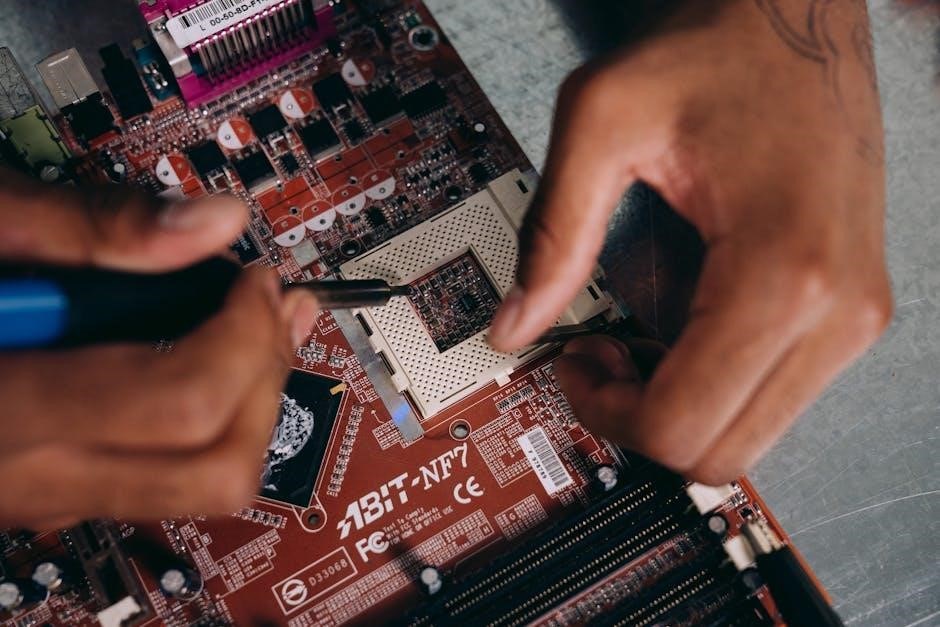
The development of EMR technology demonstrates the interdisciplinary nature of microelectronics, extending beyond circuit design to encompass environmental engineering. This application highlights the need for sustainable practices within the industry, a theme implicitly supported by the comprehensive coverage in the 8th Edition. The EMR represents a novel approach to resource recovery and pollution mitigation, showcasing the potential for microelectronics-related research to benefit broader societal concerns.
Fluoride/Silica Crystallization and Fluorosilicate Production
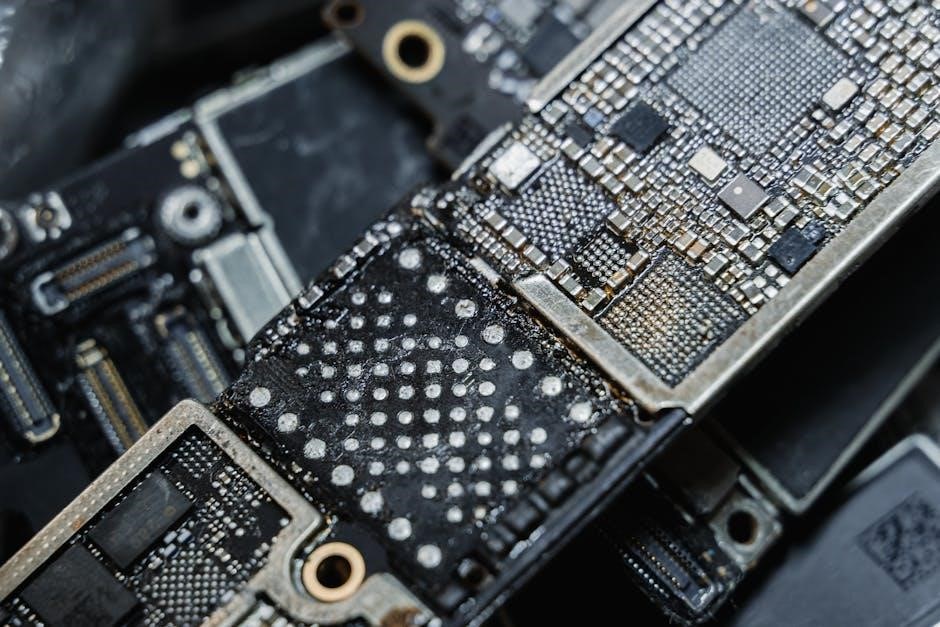
Investigations linked to the advancements discussed within the context of the Microelectronic Circuits 8th Edition PDF delve into the efficient management of byproducts generated during semiconductor fabrication. A key focus is the crystallization of fluoride and silica from microelectronic wastewaters, aiming for the production of high-purity fluorosilicates. This process is crucial for minimizing environmental impact and potentially recovering valuable materials.
The research, utilizing an Electro-Driven Membrane Reactor (EMR), represents a significant step towards sustainable microelectronics manufacturing. Understanding the chemical processes involved in crystallization and fluorosilicate formation is vital, and the principles underpinning these processes are often foundational to the materials science covered in the 8th Edition. This work demonstrates a commitment to responsible waste management within the industry, aligning with broader engineering ethics and environmental considerations.
Accessing the 8th Edition PDF
Obtaining the Microelectronic Circuits 8th Edition PDF requires exploring various avenues. While direct downloads from the authors or publisher may involve purchase or subscription, numerous online platforms offer access, often through university libraries or digital bookstores. Students frequently find the PDF through assigned course materials or institutional access.
It’s crucial to verify the legitimacy of any source to ensure a safe and legal download, avoiding potential malware or copyright infringement. Searching online academic databases and reputable educational resource websites can yield reliable results. The 8th Edition by Sedra and Smith is a widely recognized text, and its PDF version is highly sought after by students and professionals alike, making it readily available through various channels. Always prioritize legal and ethical access methods.